I designed and developed

Pilliox
Medical Calendar App
Client
Me
Stack
Figma Supabase Tailwind CSS i18n Claude Code Capacitor Vite
Industries
Healthcare
Date
2026
Challenge
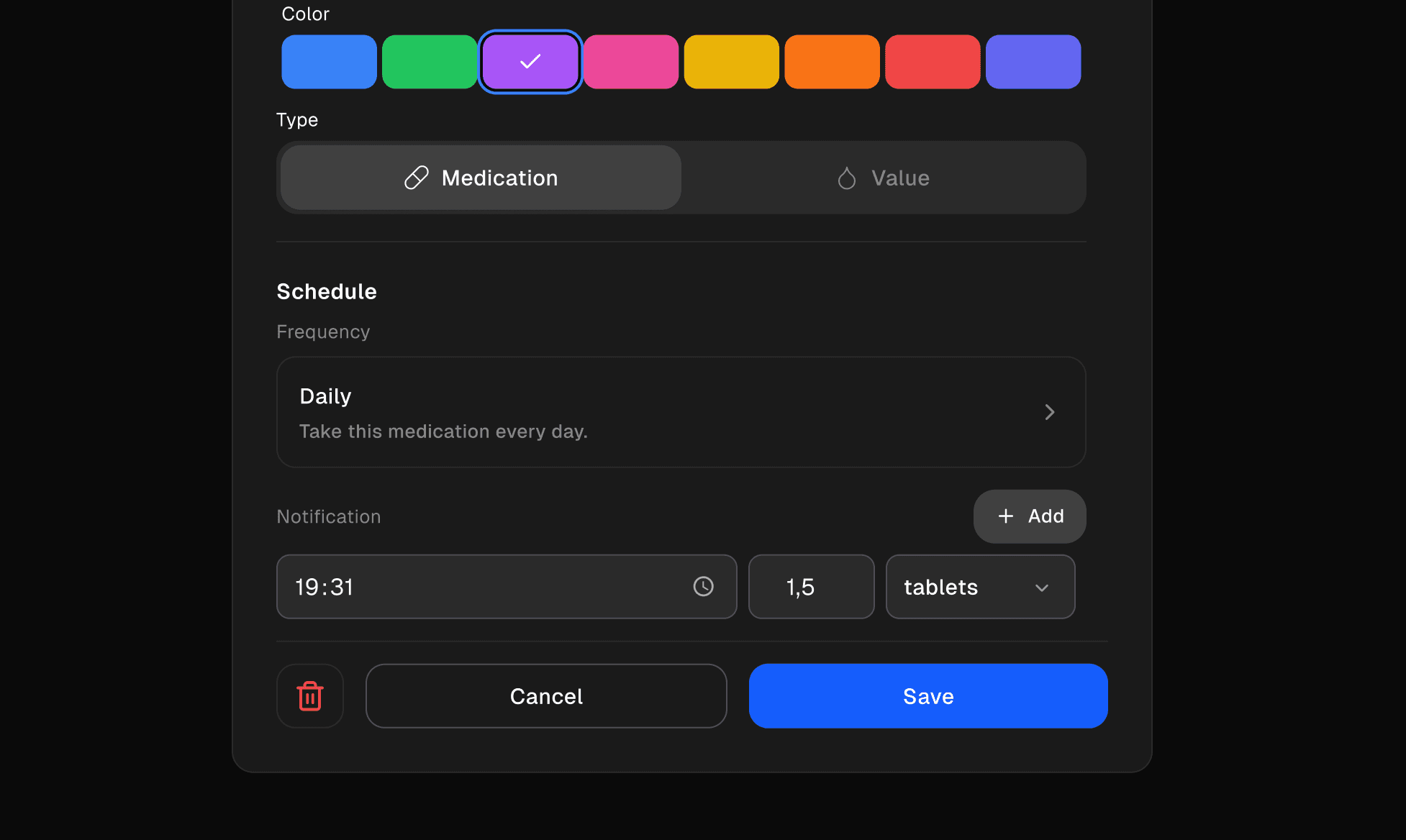
The main challenge was designing a system that feels simple, but can handle many different use cases. Medication tracking is rarely “one-size-fits-all”. Some users take pills every day, others every two or three days, and some only take medication when needed. I also needed to make health data easy to scan without turning the app into a heavy medical dashboard.
Goals
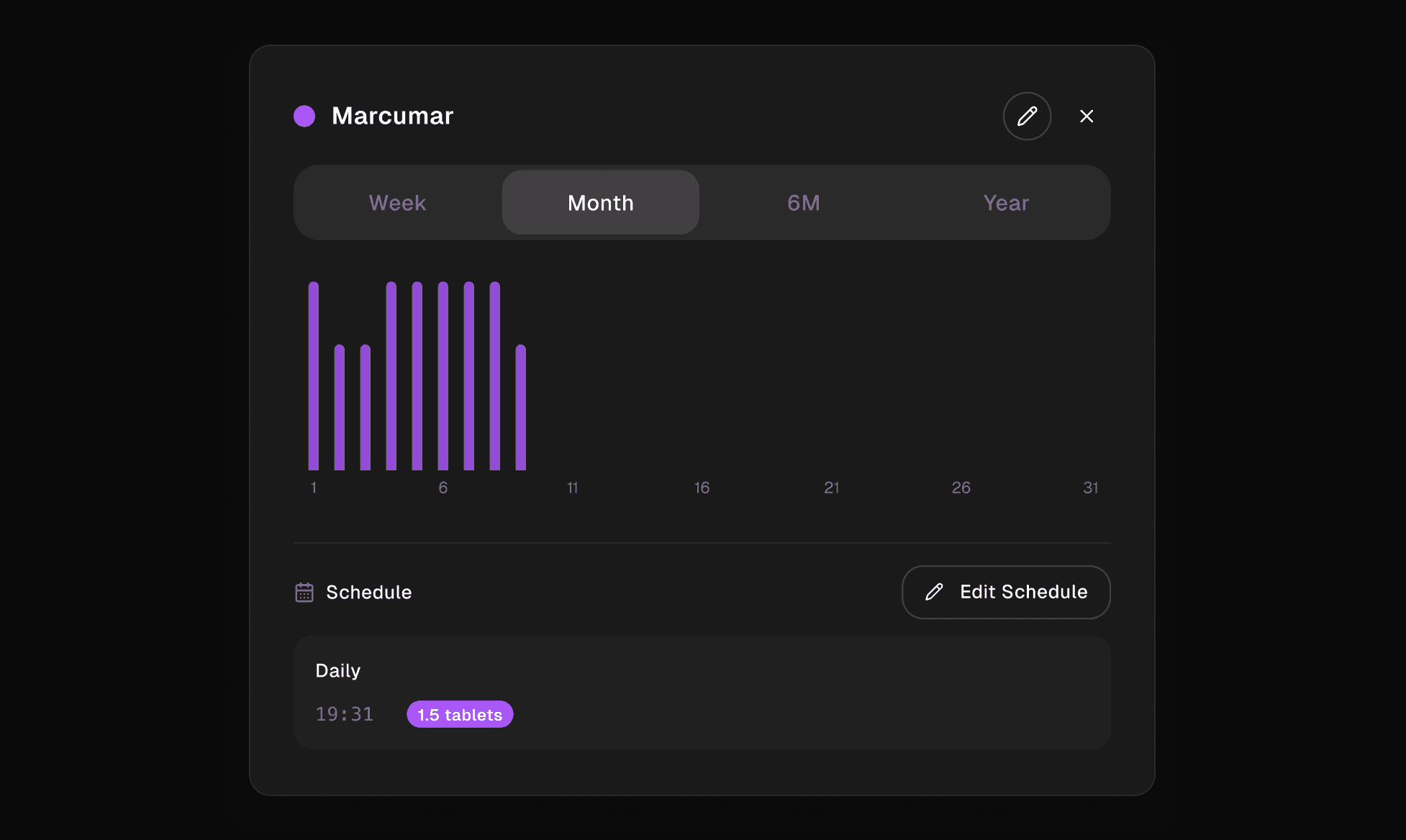
The goal was to create a clean and approachable product that helps users quickly understand what happened on a specific day. The app needed to support medication reminders, custom health values, notes, tags, and color-coded entries, while keeping the interface easy enough for everyday use.
Solution
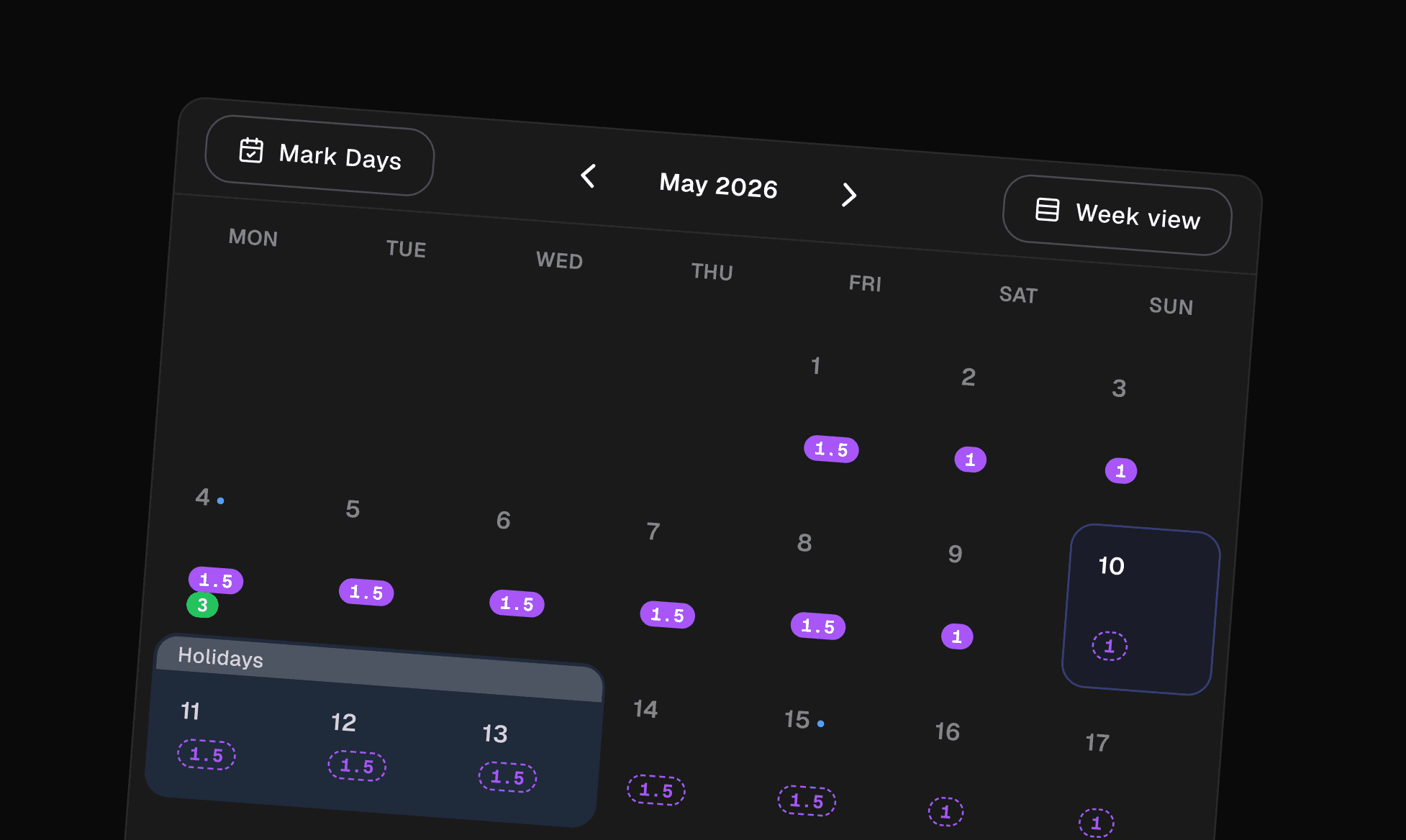
I designed Pilliox around a calendar-first experience. Each day works as a small health timeline where users can add medication, values, and notes. Instead of forcing users into strict categories, the system allows flexible entries such as daily pills, ad-hoc medication, INR values, or personal observations.
The UI uses clear spacing, soft visual hierarchy, and color coding to make important information visible at a glance. The product structure was also planned with future mobile usage in mind, so the interface could later be adapted for iOS and Android using Capacitor.
Result
The project became a strong product concept with a scalable UX structure and a realistic technical direction using React, Supabase, Tailwind, and Capacitor. It helped define not only the user interface, but also the product roadmap, monetization ideas, and early marketing strategy.